Why Your Leads Are Going Cold Before You've Even Called Them Back
You spend real money getting the phone to ring. Ads, SEO, referrals, all of it is designed to do one thing: get someone to reach out. So what happens when that call goes unanswered?
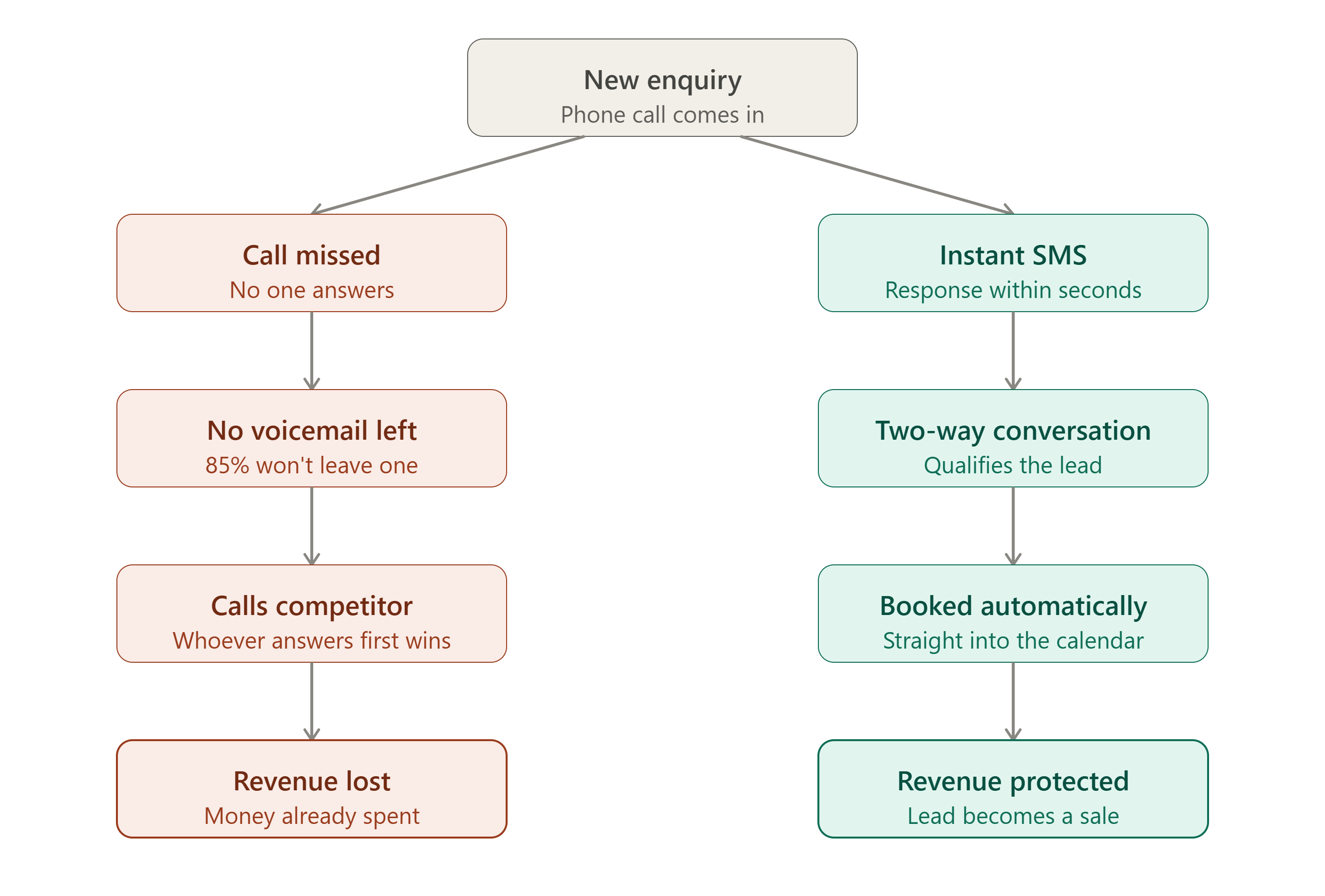
Most of the time, nothing happens. No voicemail, no follow up call. The person just moves on to whoever picks up next. And that's the part business owners miss. It's not a lead generation problem. It's a response problem.
Think about it this way
Picture a GP clinic. A patient calls to book an appointment because their back's been giving them trouble for a week. No one answers, so they hang up and ring the next clinic on the list. That clinic isn't better. It just answered the phone.
Now picture a med spa. Someone's been thinking about getting their skin sorted before a wedding. They call after work, at 6pm, and get voicemail. They don't leave a message, they just book with the med spa down the road that has an online chat that answers straight away. Same story, different industry.
In both cases, the business didn't lose the lead because of bad service or a worse offer. They lost it because someone else answered first. That's the whole game now. Whoever responds first usually wins, regardless of who's actually the better choice.
What This Is Actually Costing You
Take a typical service business getting 50 inbound calls a month. Even a conservative 16% miss rate means 8 calls a month go unanswered. If a third of those callers were ready to buy, and the average sale is worth $2,500, that's somewhere between $5,000 and $7,500 a month walking out the door. Over a year, that's $60,000 or more in revenue you already paid to generate.
You're not paying for more leads. You're paying for the same leads to answer faster.
Why "We'll Call Them Back Later" Doesn't Work
Here's the bit that catches most business owners off guard. Think about a health practitioner's clinic that gets back to missed calls at lunchtime, or end of day. By then the patient has already booked somewhere else. The moment someone enquires, they're already looking at other options. Google and Facebook start showing them competitor ads within minutes. Waiting even a few hours isn't a small delay anymore, it's the whole ball game lost.
The fix isn't hiring someone to sit by the phone all day. Most businesses can't justify a full time admin person at $55,000 to $75,000 a year just to catch missed calls. The fix is having a system that responds the second a call is missed, before the lead has a chance to look elsewhere.
The med spa example again
A well run med spa doesn't leave a client sitting in the waiting room wondering if anyone's coming. There's a process. Check in, consultation, treatment, follow up. An automated response system works the same way for your leads. The second a call is missed, a personalised text goes out, a conversation starts, questions get answered, and if they're ready, the booking happens automatically. No one's sitting around wondering if anyone's coming.
What an Automated Response System Actually Does
It's not a chatbot bolted onto your website. It's a structured system built around how your business actually handles enquiries.
When a call is missed, an instant text goes out within seconds. The system has a real, two way conversation, asks the right qualifying questions, and keeps the lead warm while you're busy with a client. When they're ready, it books them straight into your calendar. No back and forth, no chasing. If they don't book straight away, follow up sequences keep nudging gently so no one slips through the cracks. And it works after hours, weekends, and public holidays, because a 9pm enquiry deserves the same response as one at 9am.
Which Type of Automation Fits Your Business
Not every business needs all three. Here's how the main options stack up, and roughly what they cost against hiring someone to do it manually.
SMS automation
Missed call text-back and two-way conversation. The core fix for most service businesses. Setup is usually a few hundred to low thousands of dollars, then $100 to $250 a month.
AI voice call
An AI that answers or makes calls in real time. Setup typically $1,000 to $3,000, then $300 to $800+ a month depending on call volume. Best for high call volume, phone-first businesses.
Chatbot widget
Catches website visitors who'd rather type than call. Cheapest to run, a few hundred dollars to build, then $50 to $150 a month.
AI Automation vs a Salaried Person, Roughly
Setup: recruitment and training time vs roughly $1,500-$4,500 one-off
Ongoing cost: $55,000-$75,000+ per year vs roughly $6,000-$14,000 per year
Hours covered: business hours only vs 24/7, weekends, public holidays
Consistency: depends on the person vs same quality every time
A good salaried person still wins on judgement calls, relationship building, and anything genuinely complex or emotional. Automation removes the grunt work so a person spends time on the calls that actually need a human.
Is Your Business Leaking Leads? Quick Checklist
You don't know exactly how many calls you missed last month
Missed calls only get a text back once someone remembers to do it
After hours and weekend enquiries wait until the next business day
Booking still involves back and forth messages to lock in a time
Leads who don't respond straight away rarely get a proper follow up
You're spending on ads or SEO but can't say your conversion rate with confidence
Answering the phone depends on whoever's free at the time
Common Questions
Take the Freedom Checker Quiz
You're doing well. But you know there's another level you haven't reached yet. This 27-question quiz shows you exactly where your time is going — and what to fix first to get some of it back.
Show Me Where My Time Is Going →