Meta Ads for Service Businesses in Sydney & Sunshine Coast
A lot of founders wrote Meta ads off after one boosted post that went nowhere. Here is why the platform still earns its place in the budget, who it actually works for, and why the ad is only ever step one.
Reach figures sourced from Datareportal Digital 2026 Australia and industry reporting current as of publication.
Most service business owners have a Meta ads story, and it is usually not a good one. They boosted a post, spent a few hundred dollars, and got a pile of likes from accounts in another country. So they closed the ad manager and decided paid social was not for businesses like theirs.
Here is the thing. Boosting a post was never really running ads. It is the entry-level version Meta built to get people spending money, and it skips almost everything that makes advertising actually work: an offer, a reason to click, and somewhere for that click to land. Judging Meta ads on a boosted post is like judging a tradie's whole business on the one job that got rained out.
I will say this as plainly as I can. I never recommend boosting a post. Not once, not for a quick test, not ever. In my view it is one of Meta's oldest tricks, a big blue button sitting right under a post that already has a few likes, tempting you to throw twenty dollars at it and call it marketing. It is built to feel easy and cheap, and that is exactly the problem. Easy and cheap is not the same as effective, and Meta knows that better than anyone.
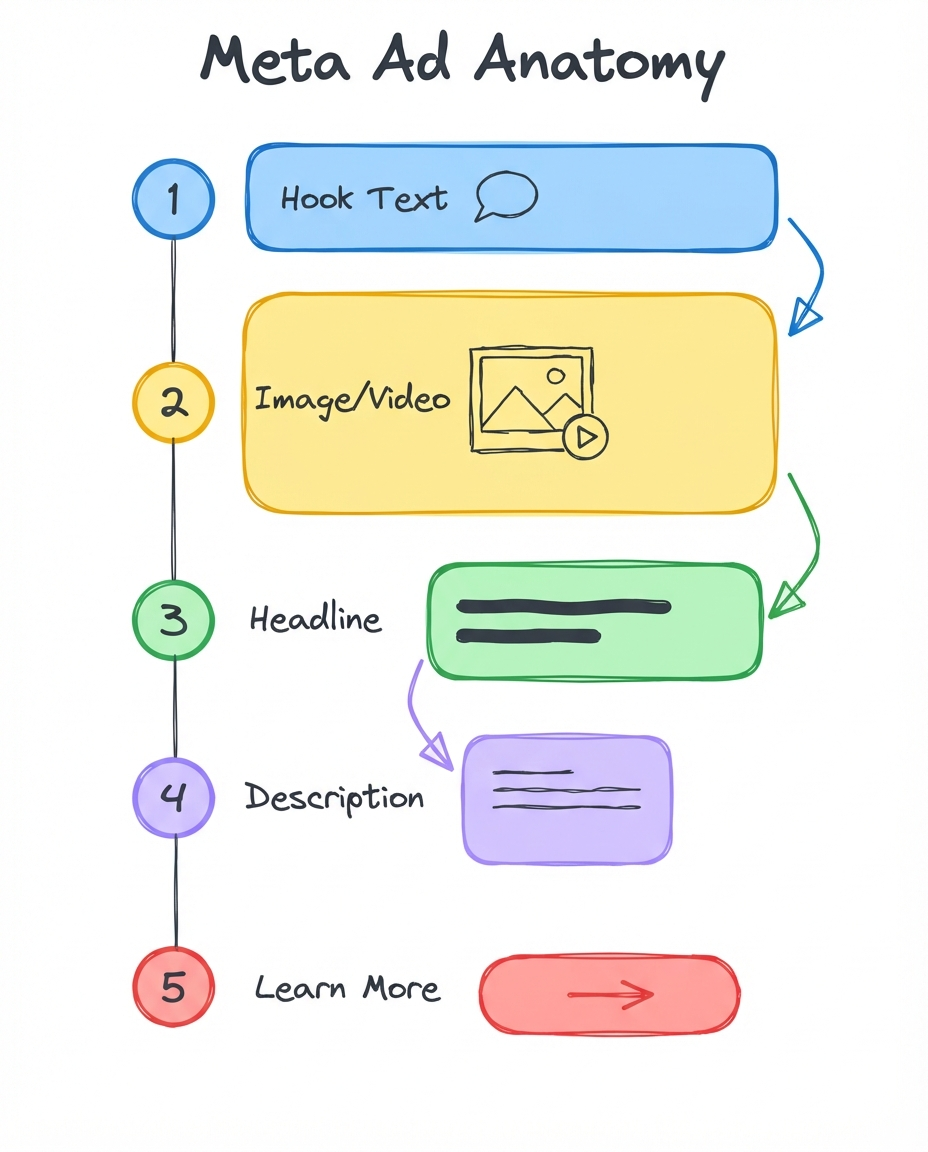
Before she would teach me anything else about paid ads, I had to take that vow. I still live by it. Every dollar that goes into a boosted post is a dollar that never had a proper offer behind it, never had a landing page built to convert, and never had anyone think about who should actually see it. You are not running an ad. You are paying Meta to confirm that people who already follow you are willing to press a heart on a photo.
Who Meta ads are actually for
Meta ads are not the right channel for every business, and that is worth saying plainly before anyone spends a dollar. They tend to work best for:
Trades and home services with a job value worth chasing, electricians, builders, pool and spa technicians, landscapers, renovators.
Health and wellness clinics where the booking decision takes a bit of thought, physiotherapy, dental, allied health, med spas.
Professional services with a longer sales cycle, accountants, financial advisers, consultants, agencies.
Multi-location or expanding businesses that need lead flow to stay consistent across more than one area, not just wherever the owner's network happens to reach.
Businesses already converting referrals well and looking for a second, scalable channel rather than relying on word of mouth alone.
It is probably not the right next move if your average job is under a couple of hundred dollars with no repeat value, or if your team cannot answer new enquiries at all right now. In that second case, fix the answering problem first, ads will only make it worse.
The platform is still where your customers are
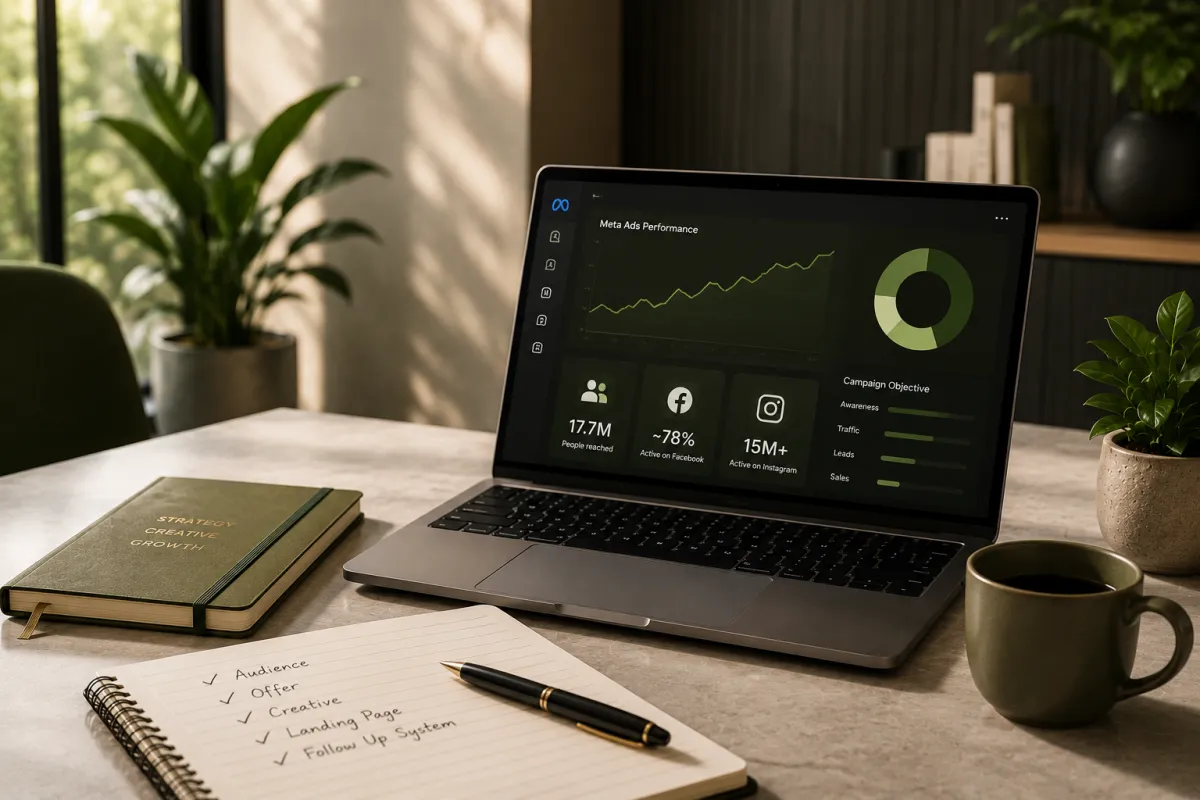
Around 17.7 million Australians can be reached through Meta's ad tools, with close to 78% of the country's social media users active on Facebook and more than 15 million on Instagram. That is not a young person's platform anymore. It is where tradies find their next apprentice, where clinic patients research before they book, and where the people who will pay for your service are already scrolling on a Tuesday night.
Google Ads catches people who already know they have a problem and are typing it into a search bar. That is valuable, but it is also a smaller pool, and you are bidding against everyone else who worked out the same keyword. Meta lets you get in front of people earlier, before they have started searching, while the need is still forming. For a service business with a longer decision, a renovation, a health issue, a big purchase, that early visibility matters.
What this looks like in Sydney and on the Sunshine Coast
The two markets do not behave the same way and treating them like they do is a common reason local campaigns underperform.
Sydney is dense and competitive. A radius that would cover an entire regional town might only cover a couple of suburbs, so targeting needs to be tighter and the creative needs to work harder to stand out. A plumber in Parramatta and a plumber in Bondi, are not fighting the same auction, and the ad needs to say the suburb, not just imply the area, to earn the click.
The Sunshine Coast runs on a wider catchment and a strong trust economy. Word of mouth still carries real weight here, so ads that feel like content from a local business, real jobs, real faces, a Maroochydore or Noosa reference people recognise, tend to outperform anything that looks like it was built for a national campaign and dropped in.
Seasonal shifts also matter more locally, tourism traffic changes what a Noosa business needs from its ads in July versus January in a way a capital city business rarely has to think about.
Meta ads are not broken for service businesses. What is usually broken is everything that happens after someone clicks.
What this looks like in practice
Three examples of how the same platform plays out differently depending on the business and the market.
EXAMPLE A pool and spa technician on the Sunshine Coast
A seasonal spike in enquiries every spring, handled through a personal Facebook page and word of mouth. Broad-targeted Meta ads running through the quieter months, paired with a simple booking form and same-day follow-up, would smooth out the feast-and-famine pattern most trades in this space deal with every year.
EXAMPLE An allied health clinic in Sydney's Inner West
Strong local reputation, but growth capped by referrals alone. Suburb-specific ads and a landing page that matches the exact service searched for, rather than a generic homepage, would open up a second acquisition channel without diluting the clinic's existing reputation.
FROM AN AMIGO MARKETING CLIENT An established wellness business
We worked with an established wellness business that had one location, no automated follow-up, and no coordinated marketing. They now have three locations, a fully automated lead and nurture system, and a brand their clients actually recognise. They are now building a business in New Zealand. The work was not about spending more on marketing. It was about building the right infrastructure.
Why the last attempt probably failed
If you have tried Meta ads before and walked away unimpressed, it was probably one of these, not the platform itself.
The ad looked like an ad. Polished stock photos and a logo do not stop anyone scrolling. A native, honest-looking photo or video does.
The targeting was too narrow. Stacking ten interests to "niche down" usually starves the algorithm of the room it needs to find buyers. Broad targeting with strong, specific creative, including your suburb or region in the copy itself, tends to outperform it.
The landing page did not match the ad. If the ad promises one thing and the click lands on a generic homepage, most people bounce before they read a word.
There was one ad, tested for a week, then written off. Ad platforms need fresh creative on a rolling basis. One ad running for a fortnight will fatigue no matter how good it is.
Leads showed up and nobody followed up fast. This is the one nobody blames the ads for, but it is the most common. Great ads still lose to a slow or missing follow-up system, more on that below.
The ad is only step one
This is the part most "just run some ads" advice leaves out entirely, and it is the reason a lot of businesses conclude Meta ads do not work when the ads were never actually the problem.
Getting someone to click is the easy part. What happens in the minutes and days after that click, whether the enquiry is picked up, how fast, by who, and what happens if they do not book straight away, decides whether that ad spend turns into revenue or disappears into a report nobody reads.
Think of it as three stages. Found is how someone discovers you, this is where the ad does its job. Won is what turns that enquiry into a paying customer, follow-up speed, a clear process, someone actually owning the lead. Kept is what happens after that, whether they come back and whether they refer someone else.
A lot of businesses spend all their effort and budget on Found and assume Won will sort itself out. It rarely does without a system behind it.
If you want a proper look at where your business sits across all three, that is exactly what a Business Growth Review is built to map out, or start with the free Freedom Checker if you want a quick read first.
Speed to lead: the real reason most leads don't convert
Here is the number that should change how every service business thinks about its enquiry process. Research from MIT, published through Harvard Business Review, found that businesses contacting a lead within five minutes are around 21 times more likely to qualify that lead than one contacted after thirty minutes.
Separately, roughly 78% of customers buy from whichever business responds first, not the cheapest, not the best reviewed, the fastest. Most businesses take hours or days to respond.
That gap is where the money goes.
No one owns follow-up. It becomes whoever has a spare five minutes, which usually means it does not happen at all.
Leads sit in an inbox or a spreadsheet instead of a system that flags them and tracks what happened next.
The first response takes hours, not minutes. By the time you call back, they have already spoken to a competitor.
Follow-up stops after one call or one message. Most buyers do not decide on the first touch, especially for a bigger purchase.
After-hours and weekend enquiries wait until Monday, even though a good chunk of leads come in outside business hours.
There is no visibility over where a lead sits, so hot enquiries and cold ones get treated the same way.
Anyone not ready to buy today gets forgotten, because there is no nurture sequence bringing them back later.
A missed call is not just a missed call. In most service businesses, it is somewhere between $500 and $5,000 walking straight out the door, and no amount of clever ad creative fixes that on its own.
What changes once the systems are in place
When the offer, the creative, and the follow-up are all sorted, Meta ads earn their spot for four reasons.
Consistent lead flow - Instead of relying on referrals and word of mouth alone, you get a channel you can turn up or down depending on how busy the calendar already is.
Lower cost per lead than most offline options - Compared to signage, sponsorships or print, Meta ads are cheap to test and easy to measure, so you know within days whether something is working.
A warm audience for slower sales cycles - Retargeting keeps your business in front of people who looked but did not book, which matters for anything with a quote, consult or higher price point.
Real market feedback - Which offer, headline or photo gets the most clicks tells you what your best customers actually respond to, and that feeds back into your website and sales conversations too.
None of that happens by accident, and none of it fixes a business where leads land in an inbox nobody checks. Meta ads are the acquisition engine. Speed to lead and a proper follow-up system are what decide whether that spend pays for itself.
Related reading
→ The Business Growth Review -A structured look at where your marketing, sales and operations are losing you leads.
→ Take the Freedom Checker - A free 3-minute scorecard showing your business's growth stage across five key areas.
→ Growth Systems Implementation - How lead capture, automated follow-up and nurture actually get built inside Magnify Hub.
→ Five places leads fall through the cracks - The common gaps between a lead coming in and a lead converting.
Common questions

Take the Freedom Checker Quiz
You're doing well. But you know there's another level you haven't reached yet. This 27-question quiz shows you exactly where your time is going — and what to fix first to get some of it back.
Show Me Where My Time Is Going →